Explain the Long-term Effects That Violence May Have on a Family.
The impact of domestic abuse on children and immature people
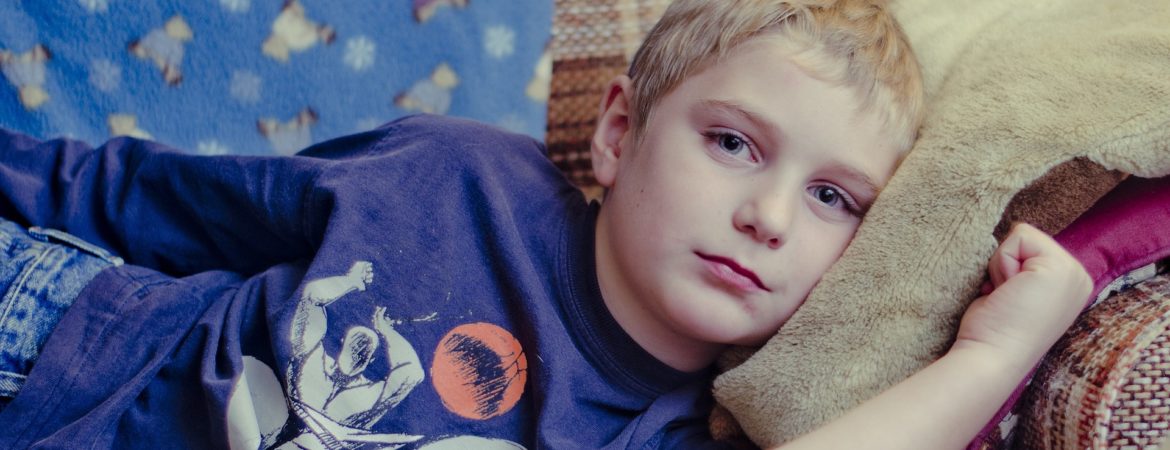
Domestic violence has a devastating impact on children and young people that can last into adulthood. Domestic abuse services offer specialist emotional and practical support for children and young people affected past domestic abuse.
- One in seven (14.2%) children and immature people under the historic period of xviii will have lived with domestic violence at some signal in their babyhood.
- 61.7% of women in refuge on the Mean solar day to Count 2017 had children (aged nether 18) with them (Women's Help, 2018 – data from Women'southward Assist Almanac Survey 2017).
- Betwixt January 2005 and Baronial 2015 (inclusive) nineteen children and two women were killed past perpetrators of domestic corruption in circumstances relating to kid contact (formally or informally arranged) (Women's Assistance, 2016). A Women's Assist review of SCRs published since August 2015 highlighted at least one more than instance falling into this category (Women'due south Aid, 2017).
- Enquiry published past Cafcass in 2017, in partnership with Women's Aid, analysed a sample of 216 child contact cases that closed to Cafcass between April 2015 and March 2016. It found that more than 2 thirds of the cases in the sample involved allegations of domestic abuse, yet in 23% of these cases, unsupervised contact was ordered at the first hearing.
- Research published by Women's Aid and Queen Mary Academy London in 2018, based on the experiences of 72 women survivors of domestic abuse whose family court case concluded the final 5 years, found show of gender discrimination and a civilisation of disbelief within the family courts organisation. The systemic nature of negative perceptions around survivors of domestic abuse and mothers who heighten concerns about child contact arrangements, along with gaps and inconsistencies in agreement and awareness of domestic abuse and its impact on children, is blocking the effectiveness of policies and practices to ensure safety child contact and increase awareness of domestic corruption within child contact procedures. The ingrained nature of such perceptions also increases the likelihood of man rights protection gaps for survivors and their children (Birchall and Choudhry, 2018).
- In the above research by Women's Aid and Queen Mary University London, 61% of survey respondents had not had any special measures in the family courtroom, 48% said that a fact finding hearing had not taken place equally office of their example, and 24% had been cross-examined by their abusive ex-partner in the courtroom.
- A recently conducted assay of 357 child contact cases in Canada, in which accusations of parental breach were involved, establish that 42% of the cases too involved allegations of domestic or child corruption. In 77% of these cases, the parental breach allegation was made by the alleged perpetrator of domestic or child corruption against the non-abusive parent (Neilson, 2018). A review of research and case constabulary on parental breach deputed past Cafcass Cymru constitute a famine of robust empirical studies. Its review of relevant reported cases betwixt 2013 and 2018 in England and Wales found that a number of the reported cases involved dissatisfied non-resident parents who made unsubstantiated and unproven allegations confronting the resident parent Doughty, Maxwell and Slater, 2018).
Are the effects the same for every child?
Children tin can experience both short and long term cognitive, behavioural and emotional effects as a result of witnessing domestic abuse. Each child will respond differently to trauma and some may be resilient and not exhibit any negative effects.
Children's responses to the trauma of witnessing domestic abuse may vary according to a multitude of factors including, only non limited to, age, race, sexual practice and stage of development. It is equally of import to remember that these responses may also be caused by something other than witnessing domestic abuse.
Children are individuals and may reply to witnessing corruption in different means. These are some of the furnishings described in a briefing by the Royal Higher of Psychiatrists (2004):
- They may become anxious or depressed
- They may have difficulty sleeping
- They have nightmares or flashbacks
- They can be easily startled
- They may complain of physical symptoms such every bit tummy aches and may offset to moisture their bed
- They may have temper tantrums and bug with school
- They may comport as though they are much younger than they are
- They may become aggressive or they may internalise their distress and withdraw from other people
- They may accept a lowered sense of self-worth
- Older children may begin to play truant, start to utilise alcohol or drugs, brainstorm to cocky-harm by taking overdoses or cutting themselves or have an eating disorder
Children may also feel angry, guilty, insecure, alone, frightened, powerless or confused. They may have clashing feelings towards both the abuser and the not-abusing parent.
Do children grow upwards to be abusers and/or victims?
The "wheel of violence" otherwise known as the "intergenerational theory" is often referred to when because the effects of domestic abuse on children; however research findings are inconsistent, and there is no automated cause and effect relationship.
We believe that this theory is disempowering and ineffective when working with children. A boy who has witnessed domestic abuse does not have to abound up to be an abuser and a daughter does non take to get a victim of domestic corruption later in life.
Educational programmes focusing on healthy relationships, and challenging gender inequality, sexual stereotyping, and domestic abuse, should be integrated with work on anti-bullying and disharmonize resolution every bit a mandatory part of the PHSE curriculum in all schools. These would act every bit important preventive measures.
Abuse through child contact
Unfortunately, even afterward separating from their abusers, many mothers detect it extremely difficult to protect their children from ongoing abuse as a consequence of their requirement to comply with contact orders made past the family unit courts. Women'southward Aid supports a kid's correct to rubber contact, only recognises that contact with an abusing parent may not always be in a child'due south best interest.
Support our campaign

Getting help and support
Communication for children and immature people through our website 'The Hideout'

Learn more than
If you're a victim of corruption, notice out how y'all can help your children

Read more than
Find out about other organisations that support children

Learn more
References
Birchall, J. and Choudhry, Due south. (2018) 'What almost my correct not to be abused?' Domestic abuse, human rights and the family courts. Published online: Women's Aid
Cafcass and Women's Aid (2017) Allegations of domestic abuse in child contact cases. London: Cafcass
Doughty, J. Maxwell, Due north. and Slater. T. (2018) Review of research and case law on parental alienation. Published online. Cafcass Cymru
Neilson, L. (2018) Parental alienation empirical analysis: Child best interests or parental rights? Muriel McQueen Fergusson Centre for Family Violence Inquiry and The FREDA Centre for Research on Violence Confronting Women and Children
Radford, L., Aitken, R., Miller, P., Ellis, J., Roberts, J., and Firkic, A. (2011)Meeting the needs of children living with domestic violence in London Research report. London: NSPCC and Refuge
Women's Aid. (2016)Nineteen Kid Homicides. Bristol: Women'southward Aid
Women's Aid. (2017) Child Showtime: A call to action i year on . Bristol: Women's Aid.
Women's Aid (2018)Survival and Beyond : The Domestic Abuse Written report 2017. Bristol: Women's Assistance
Source: https://www.womensaid.org.uk/information-support/what-is-domestic-abuse/impact-on-children-and-young-people/
0 Response to "Explain the Long-term Effects That Violence May Have on a Family."
إرسال تعليق